Best Gimbals for Mirrorless Cameras
Affiliate disclosure: As an Amazon Associate I earn from qualifying purchases. Product links marked as paid may generate a commission at no extra cost to you.
A mirrorless-camera gimbal is useful only when it supports your exact camera, lens and filming workflow. This guide compares modern DJI Ronin options using official payload and compatibility information, then puts older PilotFly, CAME-TV, IKAN and EVO products into proper historical context. The original comparison included many launch-era claims and retail listings; this replacement focuses on what different types of creators genuinely need, with no unsupported personal testing rankings.
Which size gimbal should you consider?
| Camera setup | Gimbal category to assess | Principal trade-off |
|---|---|---|
| Small mirrorless body with compact lens | DJI RS 4 Mini if the exact setup is supported | Lower payload headroom but less gimbal mass |
| Mid-size mirrorless kit with a supported zoom | DJI RS 5 or RS 4 category | More carrying weight and setup complexity |
| Large professional rig with additional accessories | Manufacturer-approved higher-payload system | Higher cost and operator fatigue |
| Static interviews and product demonstrations | Tripod or stable camera support | Less movement, simpler setup |
DJI RS 4 Mini: compact option for lighter mirrorless kits
DJI publishes a tested payload of 0.4–2 kg for RS 4 Mini and a gimbal mass of about 890 g with the specified quick-release plate, excluding its separate tripod accessory. It supports native vertical filming, automatic axis locks and certain intelligent tracking accessories. A quoted maximum runtime of 13 hours is based on stationary, balanced use, with movement reducing real operating time. Source: DJI RS 4 Mini official specs.
Its lower weight can be attractive for travel vlogging or small mirrorless rigs, but lens dimensions and clearances still determine compatibility. The largest payload number does not ensure that a long lens, tall camera or cage can balance. Confirm the specific model on the manufacturer camera-support list and assess whether the controls you need are supported.
DJI RS 5: expanded flexibility for a larger compatible rig
DJI’s Ronin comparison lists RS 5 with a 3 kg tested payload and a gimbal weight of about 1.46 kg when including the specified grip and plates. Its published maximum standby runtime is approximately 14 hours with the stated battery grip under stationary balanced conditions. Those figures are manufacturer data, not GoGimbals field-test measurements. The heavier equipment can make more sense with a larger compatible lens and an extended accessory ecosystem.
The important limits are physical clearance, approved mounting, camera-control support and overall portability. A full-day session with a larger motorized rig demands more planning than a short filming sequence with a small camera. Official source: DJI Ronin family comparison.
RS 4 Mini versus RS 5: what the specifications establish
Product listing: DJI RS 4 Mini Combo on Amazon (paid link). This is the Combo configuration, not necessarily the basic RS 4 Mini kit. Verify the camera support, accessories and seller.
| Consideration | RS 4 Mini | RS 5 |
|---|---|---|
| Tested camera payload | Up to 2 kg | Up to 3 kg |
| Gimbal weight basis | Around 890 g with plate, no tripod | Around 1.46 kg including grip and plates |
| Vertical shooting | Supported | Supported |
| Who may prefer it | Light camera kit, travel | Larger supported lens or additional camera hardware |
| What still requires verification | Exact camera/lens and control cables | Exact camera/lens balance, clearance and support |
Why the lens matters as much as the camera body
A complete payload includes the battery, lens, filter, mounting accessories and approved camera attachments. The center of gravity can change substantially when a zoom lens extends or an accessory moves away from the camera body. This means two camera setups of equal mass may balance differently. Choose based on the camera manufacturer’s and gimbal manufacturer’s actual compatibility information, not just the headline “2 kg” or “3 kg” number.
- Check that the specific camera body and lens combination is documented as compatible.
- Allow room for a vari-angle screen, viewfinder and lens movement.
- Confirm whether recording start/stop, focus or other electronic functions need a particular cable or firmware.
- Consider whether portrait shooting, tracking accessories or an external monitor are genuinely part of your workflow.
- Evaluate total mass for the full shooting day, including batteries, support and carrying case.
What a gimbal can and cannot fix
A motorized gimbal corrects unwanted rotation along pan, tilt and roll. It does not remove every up-and-down movement caused by walking or automatically create a well-exposed, well-composed shot. Camera autofocus, light, lens behavior and sound recording remain separate considerations. For static filming, a stable tripod may outperform an elaborate moving-camera setup simply because it is more predictable.
Good movement follows the story: use a slow reveal when a change in viewpoint helps explain a scene, and a static shot when movement would distract. Read our camera movement guide and three-axis stabilization explanation for fundamentals.
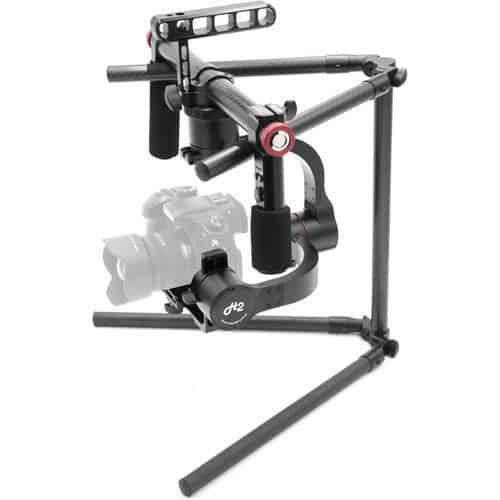
Historical comparison: PilotFly H2 and CAME-TV Optimus
Older GoGimbals reviews covered the PilotFly H2 Professional Kit and CAME-TV Optimus. These units are useful reference points for how motorized stabilizers developed, but the original rankings, retailer prices and software statements no longer establish the best available equipment. When considering a used example, verify the exact mounting hardware, charger, control cables, original firmware and camera compatibility. A product that once supported a specific camera may not meet the needs of a newer rig.
Historical comparison: IKAN Beholder DS1 and EVO Rage
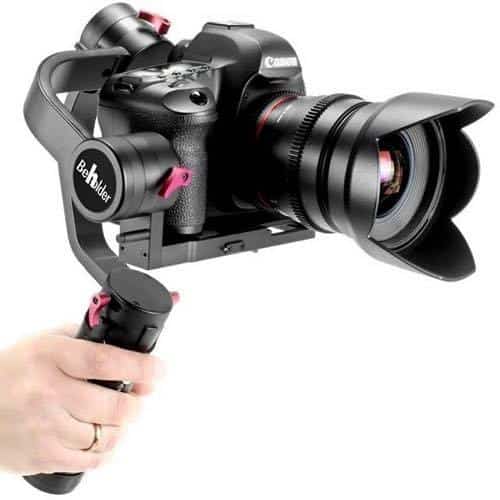
The IKAN Beholder DS1 and EVO Rage are another pair of earlier options. Their historical features can matter to a current owner maintaining an existing device, but second-hand buyers should investigate worn batteries, balancing plates, spare parts and the state of the original software. Avoid paying for a feature described in an old review without checking whether it works on your present camera.
What to check in a used camera gimbal
- Match exact model and hardware generation; similar model names can have different supported payloads.
- Look for original quick-release plates, batteries, grips, mounting hardware and chargers.
- Confirm motor and control operation with the particular camera and lens you intend to use.
- Check firmware and app availability instead of trusting launch-year reviews.
- Compare the total cost and return policy with supported current-generation alternatives.
Frequently asked questions
Does a gimbal’s tested payload guarantee my camera will fit?
No. Lens clearance, center of gravity, mounting configuration and cable compatibility also matter. A manufacturer’s tested payload is one specification, not an exhaustive compatibility list.
Is the heavier model always more stable?
No. Balance, shooting technique, motor tuning and the rig’s intended use determine practical results. A larger gimbal can create unnecessary bulk for a very small camera.
Do I need automatic tracking?
Only if the relevant camera, app or accessory supports it and it helps your recording task. A reliable static shot may be simpler for a fixed subject.
Are the older PilotFly and IKAN reviews still relevant?
They remain useful for identifying legacy gear and understanding historical features, but not as verified current shopping rankings. Consider current support and the actual unit’s condition.
Archived affiliate references
Some original product links included Amazon affiliate tracking. Historical links are retained where an identifiable destination remains, but seller details and availability are not verified. GoGimbals may receive a commission for qualifying purchases.
- Earlier mirrorless-gimbal product listing 1 (check model and seller)
- Earlier mirrorless-gimbal product listing 2 (check model and seller)
- Earlier mirrorless-gimbal product listing 3 (check model and seller)
- Earlier mirrorless-gimbal product listing 4 (check model and seller)
- Earlier mirrorless-gimbal product listing 5 (check model and seller)
- Earlier mirrorless-gimbal product listing 6 (check model and seller)
- Earlier mirrorless-gimbal product listing 7 (check model and seller)
Sources and further reading
Manufacturer references: DJI RS 4 Mini specifications and DJI Ronin model comparison. See also our DSLR stabilizer guide, three-axis gimbal basics and smartphone gimbal guide. The current comparison uses manufacturer specifications and does not claim unsupplied personal footage, laboratory measurements or guaranteed stock.