How Does a 3-Axis Gimbal Work?
A three-axis gimbal is a camera support that uses sensors and motors to adjust orientation around pan, tilt and roll. Its goal is to reduce unwanted angular movement and help the camera follow deliberate framing. This revised guide explains the mechanics, the difference from electronic image stabilization, and how to decide whether an extra gimbal is useful. It replaces older overly broad product and battery claims with practical, evidence-based distinctions.
The three axes in plain language
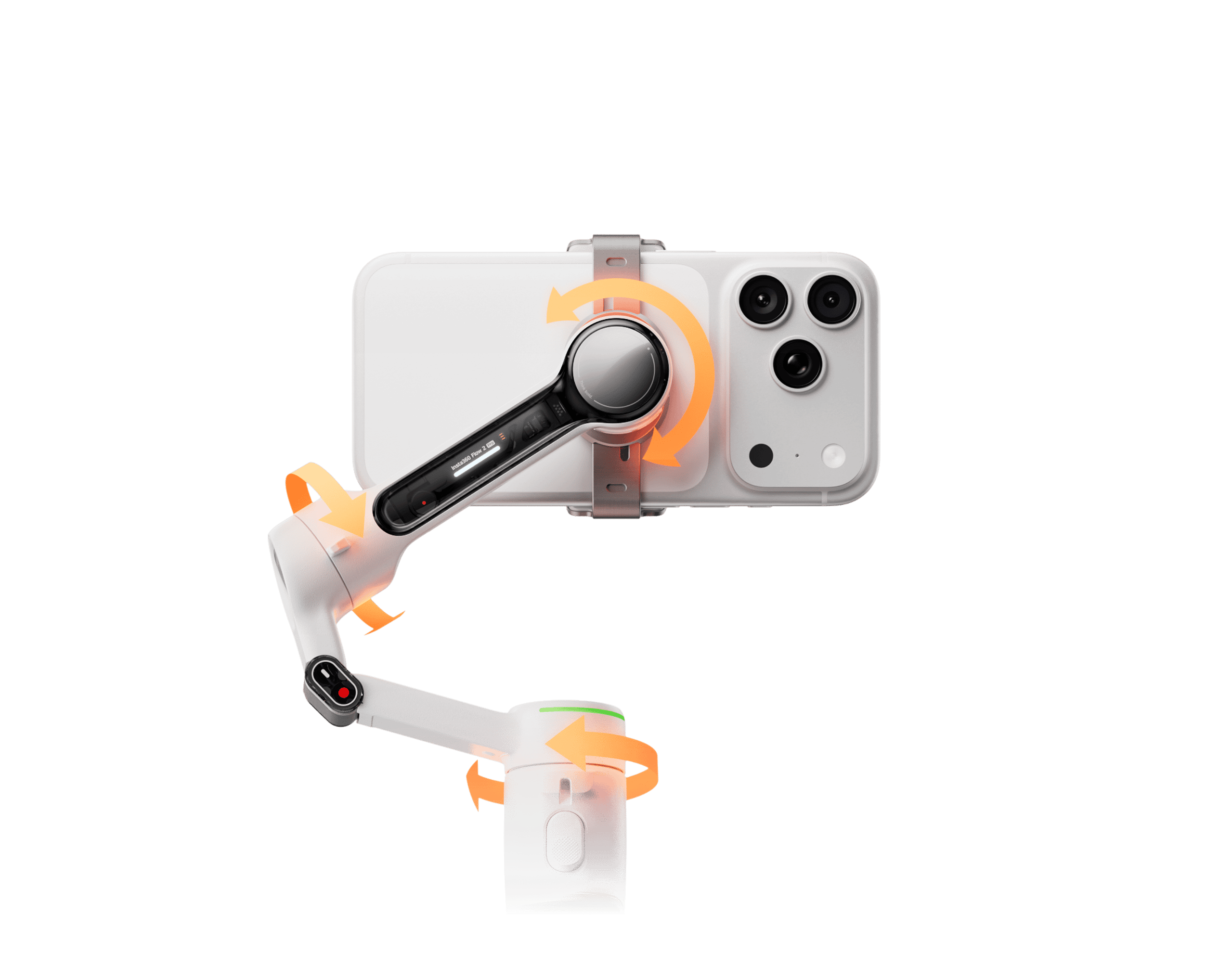
- Pan: turning the camera left or right around a vertical axis. A smooth pan can reveal more of a scene without abruptly changing framing.
- Tilt: angling the camera upward or downward, such as changing emphasis from an object to its surroundings.
- Roll: rotating the horizon clockwise or counterclockwise. Roll stabilization helps keep an intended horizon level.
A gimbal’s inertial sensors measure motion, and its motor controls change camera orientation. The specific range of each axis, motor strength and operating modes vary by product. The system can oppose some unwanted rotation, but it does not cancel every translation or camera movement. The smoothness of a shot still depends on the operator, lens, framing, software and environment.

Mechanical gimbal versus electronic and optical image stabilization
Mechanical stabilization physically changes camera orientation. Electronic image stabilization analyzes motion and adjusts or crops the captured frames, while optical stabilization shifts lens or sensor elements in supported cameras. These approaches can complement one another. However, their benefits depend on the camera, field of view, lens and recording mode; turning on more stabilization does not automatically improve every shot.
An action camera may already use effective electronic stabilization, while a smartphone can combine optical and software corrections. A powered external gimbal is most useful when independent control of pan, tilt and roll is required. For mostly stationary filming, a tripod often provides a more predictable result with less setup. Our GoPro HyperSmooth and external gimbal comparison explains why built-in stabilization can be sufficient for many action-camera shots.
What sensors and motors do during a shot
A powered gimbal tracks the changing orientation of its camera and adjusts motor torque to maintain the selected behavior. Common modes let the camera follow some movements while resisting others, and some products can accept joystick or app commands for deliberate camera direction changes. A gimbal is still limited by its physical range, supported payload and motor response. Product documentation—not a generic three-axis description—determines the exact modes of a given unit.
Why vertical bouncing can remain visible
The axes describe rotation. When a camera moves vertically with the operator, a three-axis gimbal alone cannot perfectly remove that translation. A long lens can also magnify apparent movement. This is why careful shot planning, sensible framing and choosing an appropriate camera configuration can matter as much as the hardware. For more on footage composition, read our movement and framing guide.
Payload and balance: the real buying constraints
A rated payload is a manufacturer reference for the supported camera load. For a mirrorless rig, consider the full camera, lens, filters, battery and approved accessories rather than the body alone. For smartphones, include the case and verify clamp width and thickness. The center of gravity and geometry can make a camera harder to balance even when it is under the advertised load ceiling. Always consult the precise manufacturer’s combination list.
For example, DJI specifies a tested payload of 0.4–2 kg on the RS 4 Mini and 3 kg on the RS 5; these figures are not guarantees that every lens-and-camera combination within the mass range will fit. See RS 4 Mini specifications and DJI’s Ronin model comparison.
Benefits and limitations at a glance
- Benefit: more deliberate controlled camera orientation than unsupported handheld rotation.
- Benefit: repeatable changes in framing for some moving-camera scenes.
- Limitation: requires a compatible camera and sometimes additional app or control accessories.
- Limitation: adds battery management, weight, setup and potentially vulnerable connectors.
- Limitation: does not correct bad lighting, focus, audio or every vertical movement.
Picking a gimbal for the kind of camera you own
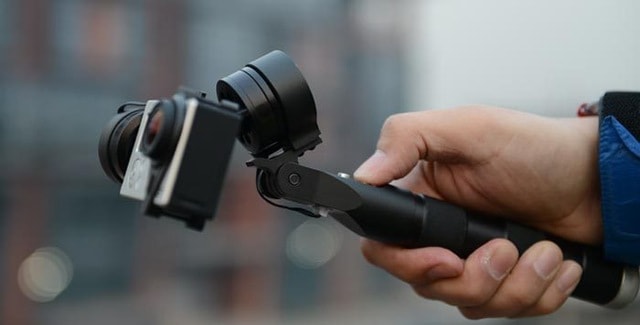
A phone gimbal is usually designed for a specific phone weight and clamp range, with app-based functions that depend on the operating system. An action-camera gimbal has a different physical layout and often narrower camera-control compatibility. A DSLR/mirrorless gimbal may need more balancing capacity and lens clearance. Start with the camera, not a generic “best stabilizer” ranking.
For practical comparisons, see the smartphone guide, action-camera guide and mirrorless guide.
Common questions
Will any three-axis gimbal remove all shake?
No. Mechanical control of rotation does not eliminate every vertical jolt, focus issue or sensor artifact.
Is a 3-axis design always better than a 2-axis design?
Not automatically. The omitted axis, intended filming conditions, size and compatibility determine usefulness. Three-axis control is desirable when the third rotation is important for a particular shot.
Do all gimbals have the same battery life?
No. Runtime claims depend on motor load, movement, temperature, accessory use and the manufacturer’s test method. Never assume a particular battery chemistry or cell format applies to every device.
When is a tripod the better choice?
For fixed interviews, ordinary product demonstrations or other stationary scenes, a stable support may offer simpler, repeatable framing.
Editorial method
This is a general technical explanation supported by manufacturer specifications and established stabilization principles. It does not claim original laboratory measurements or advise unsupported modifications to a gimbal’s battery or electronics.
Related reading: For DSLR camera payload and balancing, consult this related GoGimbals article. For Hohem model differences and protection ratings, consult this related GoGimbals article. For older wearable gimbal technology, consult this related GoGimbals article.