Zhiyun Smooth-Q: Original Specs, Compatibility and Used Buying Guide
Affiliate disclosure: As an Amazon Associate I earn from qualifying purchases. Product links marked as paid may generate a commission at no extra cost to you.
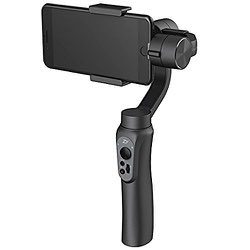
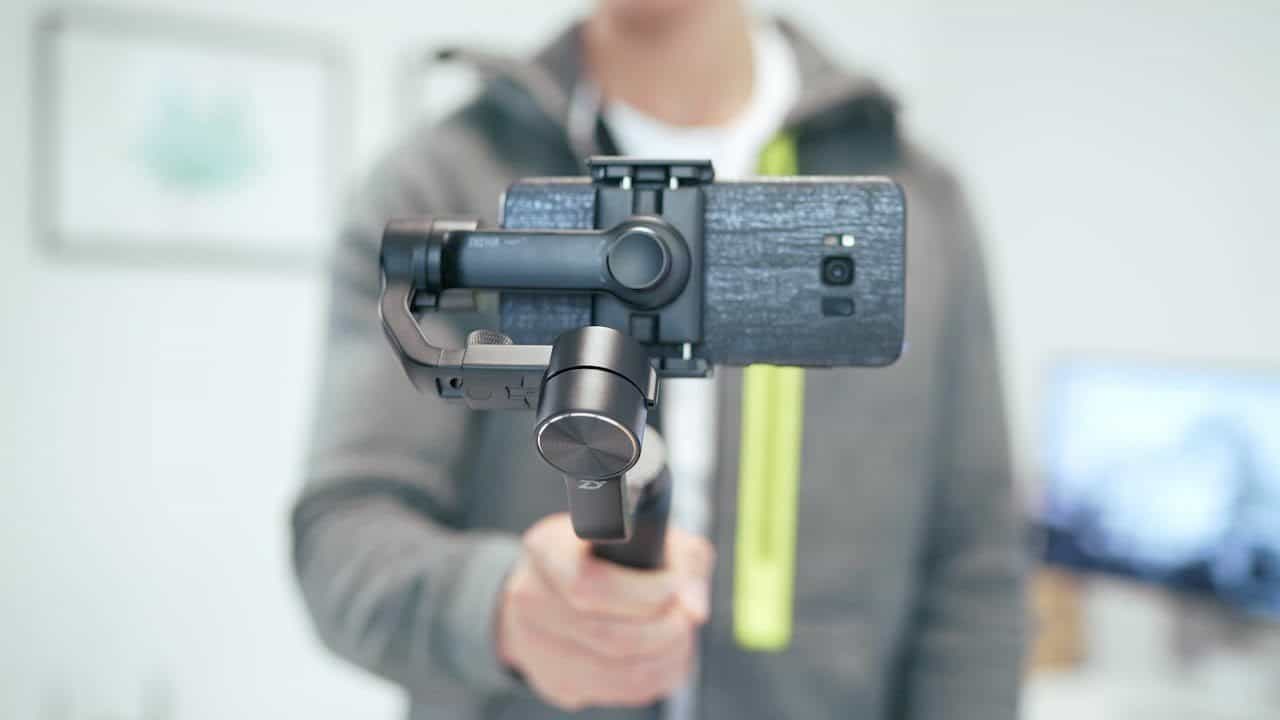
The original Zhiyun Smooth-Q is a legacy three-axis smartphone gimbal. It was designed around much smaller and lighter phones than many of today’s devices. This refreshed article is a researched retrospective and used-product buying guide rather than an unsupported claim that the Smooth-Q is still one of the best smartphone gimbals for current handsets. The main questions are whether your phone fits the original hardware, whether necessary software remains usable, and whether the specific unit’s battery is healthy.
Original Smooth-Q specifications: what the manual says
Zhiyun’s original Smooth-Q manual lists a supported payload of 75–200 g, a phone clamp range of 58–85 mm and a horizontal-arm adjustment range of 15 mm. It describes three-axis control with 360-degree continuous pan and a typical operating-time claim around 12 hours under properly balanced, stationary testing conditions. Those are manufacturer statements about a legacy model, not tests conducted by GoGimbals with today’s phones.
| Specification | Original Smooth-Q documentation | Buying implication |
|---|---|---|
| Phone payload | 75–200 g | Many current phones with a case exceed the original limit |
| Clamp width | 58–85 mm | Check full phone-plus-case width |
| Horizontal-arm adjustment | 15 mm | Not every phone shape will balance |
| Pan | Continuous 360° per manual | Camera orientation control, not a complete correction for walking movement |
| Quoted runtime | Around 12 hours under manufacturer test conditions | Older batteries may offer substantially less today |
| Charging interface | Micro USB on the original model | Check charger and connector condition |
Manufacturer reference: Zhiyun Smooth-Q downloads and support. These figures apply to the original Smooth-Q, not later Smooth Q2, Smooth 4 or other similarly named models.
Is the original Smooth-Q compatible with a modern phone?
Do not assume it is. The original 200 g upper payload limit can be exceeded by a current smartphone, particularly with a protective case. Clamp width alone is not enough; the phone’s center of gravity, camera bump and thickness can affect balance. The phone and gimbal must also be compatible at the software level if you need more than the basic motorized orientation controls.
Check whether the manufacturer’s historical app and operating-system support cover the device you actually use. Some older gimbals may still function mechanically even if advanced app features are no longer available, but those differences have to be verified on the specific model. A reseller’s broad statement that a device “works with iPhone and Android” is not a full compatibility list.
What three-axis stabilization can improve
A working Smooth-Q can mechanically adjust the phone’s orientation through pan, tilt and roll. This helps make a deliberate pan or frame an ordinary handheld subject, but it does not remove every vertical movement from walking, correct poor sound or compensate for inadequate light. A modern phone’s own image stabilization may already be enough for casual recordings. For the basic physics, see our three-axis stabilization explainer.
Strengths of keeping a working Smooth-Q
- Useful mechanical stabilization for a supported, light smartphone.
- Physical joystick and mode controls offer a different filming workflow from camera-only stabilization.
- The published 360-degree pan capability can support deliberate framing where appropriate.
- A functioning device already owned may make more economic sense than buying another accessory.
Limitations and reasons to hesitate
- The original 200 g payload ceiling is restrictive for many modern phones and cases.
- Battery health is uncertain after years of storage or use.
- Micro USB charging and legacy software may be less convenient than newer supported models.
- There is no basis for claiming current app compatibility without verifying a specific phone.
- A modern phone camera and tripod may meet many simple filming needs without a separate gimbal.
How it compares with a current smartphone gimbal
The Insta360 Flow 2 Pro has manufacturer-supported phone mass of 130–300 g, with a 64–84 mm width range and advanced tracking functions in supported applications. DJI Osmo Mobile 8 specifies 170–300 g, 67–84 mm width and its own camera-control ecosystem. These modern models may better accommodate heavier phones, but neither automatically produces better storytelling or audio. Source specifications: Insta360 Flow 2 Pro and DJI Osmo Mobile 8.
The original Smooth-Q should be judged as a historic product that may still be useful in compatible conditions, not as a current performance winner against devices introduced years later. Read the smartphone gimbal comparison and iPhone gimbal guide for a broader decision framework.

A practical second-hand buying checklist
- Identify the model label and compare it with original Smooth-Q documentation; avoid conflating related generations.
- Check full phone mass and clamp dimensions including the case.
- Ask for evidence of operating motors and charging from the actual unit.
- Check whether original charging equipment and any required accessories are included.
- Verify software support for your intended phone and app before committing to a purchase.
- Evaluate the value relative to keeping your phone on a tripod or using in-phone stabilization.
Frequently asked questions
Can a Smooth-Q support a phone weighing 240 g?
The original manual’s published maximum payload is 200 g, so a 240 g phone would be outside the documented supported range. Do not rely on a reseller claim to override the original specification.
Will it still track a person in any recording app?
No universal tracking compatibility is established for the original model. Advanced software controls depend on the exact app and phone; do not assume modern tracking features exist on this historical gimbal.
Can I expect its original 12-hour runtime?
No. That figure refers to manufacturer test conditions when the product was new. An aged battery can perform differently.
Is a low used price enough reason to buy it?
Only when you have confirmed fit, functionality, condition and a genuine need for motorized stabilization. Compatibility problems can erase the saving.
Archived affiliate listings
The original article included tracked retailer links. These are kept as historical purchase references, not live pricing or endorsements. GoGimbals may receive a commission from qualifying purchases; inspect the exact item before ordering.
- Archived Zhiyun product listing 1
- Archived Zhiyun product listing 2
- Archived Zhiyun product listing 3
- Archived Zhiyun product listing 4
Editorial notes and source
Primary historical reference: Zhiyun’s Smooth-Q support/download page and its user guide. Contemporary comparison references: Insta360 and DJI. Manufacturer specifications and reasoned buying guidance are used here; no new hands-on lab measurements or fabricated personal experience are claimed.
The MOZA Mini-S used-buying guide provides a related example of how original phone payload limits, battery design and software age shape the value of older smartphone stabilizers.