IPX4 vs IP67 for Camera Gimbals: Splash Resistance Explained
Is an IPX4 gimbal waterproof? No. IPX4 is a test classification for splashing water, not an approval to immerse a powered camera stabilizer. IP67 describes a different combination of dust protection and temporary-immersion testing. If a GoPro is itself waterproof, that rating does not transfer to the gimbal holding it. This guide explains what the symbols mean, what real manufacturers actually claim, and how to interpret the difference before buying.
This article is a technical companion to our water-resistant camera gimbal buying guide. It deliberately does not create a second general product ranking. The reference standard is IEC 60529, Degrees of Protection Provided by Enclosures (IP Code); actual product claims should be checked against the maker’s model-specific documentation.
What the two characters in an IP rating tell you
In an IP designation, the first characteristic numeral concerns protection against solid foreign objects and access; the second concerns water ingress under specified test conditions. An “X” in the first position indicates that no degree of protection is specified in that part of the code. It does not mean “completely dustproof,” and it does not make the second digit irrelevant.
| Designation | Solid-object rating | Water-ingress test meaning | What it does NOT prove |
|---|---|---|---|
| IPX4 | X: not specified in the code | Resistance to splashing water from any direction under the relevant test | Immersion, strong jets, or unlimited exposure |
| IP54 | 5: dust-protected | 4: splashing water | Dust-tightness or underwater operation |
| IP67 | 6: dust-tight | 7: temporary immersion under defined test conditions | Unlimited underwater use or resistance to every water jet |
| “Splash-proof” with no IP code | Not established by the wording | Specific meaning depends on the manufacturer | An IPX4, IP67, or immersion certification |
The table is a simplified interpretation, not a replacement for the detailed standard or a device’s manual. IP67 is not simply a “higher waterproof version” of IPX4 in every real-world situation: different water tests evaluate different exposure conditions, and wear, impacts, seals, caps, pressure and time can change what is appropriate for a particular device.
Why IPX4 is useful—but easy to overstate
IPX4 is relevant when a device may encounter incidental splashes. It does not describe whether that device remains suitable for prolonged rain, high-pressure water jets or submersion. More importantly, the rating applies to the specific tested enclosure, not to every part of a filming setup assembled with third-party accessories. A camera, gimbal, microphone and connector can have different limitations.
Hohem’s official iSteady Pro 4 FAQ is unusually clear: it calls the unit IPX4 splash-proof and states that it is resistant only to accidental splashes, not scenarios involving direct immersion or water-ingress risks. That precise statement matters more than advertising photographs in rain or near a lake.
What IP67 actually describes
The IP67 designation combines a level-six solids classification with a level-seven water classification for temporary immersion. The water test has defined conditions; it is not a promise that water can never enter under any circumstances. Do not assume that exposure to waves, strong water jets or aged seals has been tested simply because “67” appears on a listing. Read the device maker’s stated operating limitations and warranty conditions, too.
A generic website saying that IP67 is “waterproof to any depth” would be misleading. The relevant test for the second digit seven is limited, and manufacturers may specify their own product-specific conditions. A device with an IP67 label also does not transfer that label to a separate accessory mounted beside it.
Actual camera-gimbal examples: what is documented?
| Example | Published wording | Practical buying conclusion |
|---|---|---|
| Hohem iSteady Pro 4 | IPX4 splash-proof; FAQ warns against immersion | Evaluate only for the manufacturer’s intended incidental-splash conditions |
| FeiyuTech G6 Max | “Splash-proof” in manufacturer materials | Do not infer an IP67 certificate or submersion protection |
| Older Feiyu WG2 or REMOVU S1 | Historical marketing and varying product generations | Find the exact original manual before relying on any water claim |
| Waterproof action camera on an external gimbal | Camera rating depends on that camera model | The powered gimbal retains its own separate limitations |
The iSteady Pro 4 manufacturer specifications state IPX4, while FeiyuTech describes the G6 Max as splash-proof. That language is not enough to call either device IP67 or immersion-rated. For the related question of camera compatibility, see our Hohem Pro 2 versus Pro 4 guide.
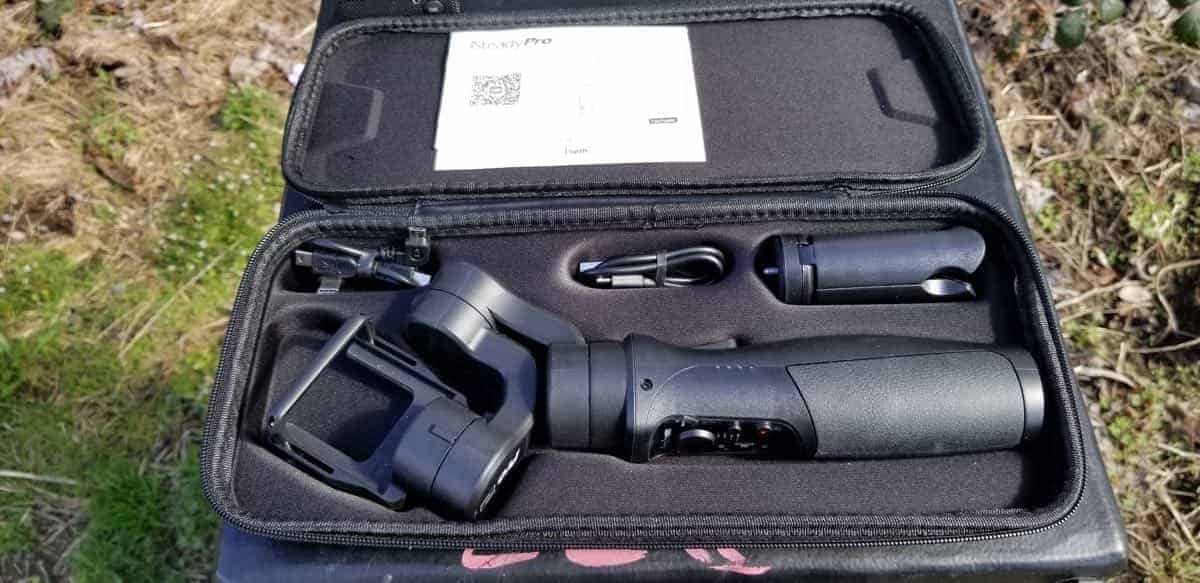
The waterproof camera versus the not-waterproof gimbal
Camera manufacturers may test a camera body for a specified depth or water exposure. A motorized gimbal includes a separate battery, motors and connectors; no amount of camera sealing automatically protects those components. Even if the camera is rated for water, the whole system must be assessed component by component. Camera housings, microphones and charging accessories can introduce further limitations.
The issue is relevant to action-camera creators who compare a weather-resistant camera’s built-in stabilization with the benefits of external motors. If the shot does not require a controlled pan or independent camera orientation, avoiding an external gimbal may simplify the equipment. See our GoPro gimbal comparison and three-axis stabilization explainer.
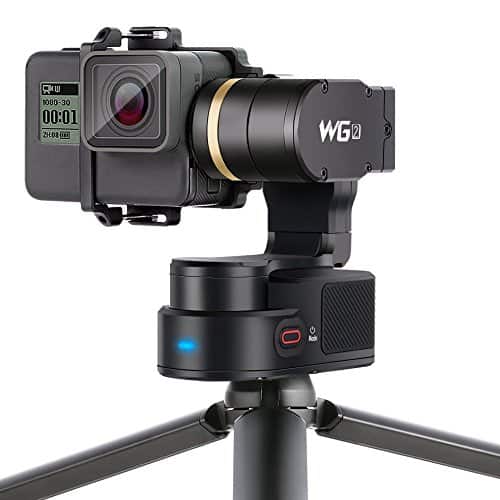
A practical buyer’s decision matrix
- Mostly dry indoor filming: prioritize compatibility, payload, application support and camera movement; an IP rating may have little practical value.
- Occasional incidental spray: look for an explicit model-specific splash classification, and read the maker’s restrictions rather than extrapolating from marketing imagery.
- Heavy or unpredictable water exposure: a general splash-proof claim is not enough. Do not assume any powered gimbal is suitable without specific manufacturer approval for that environment.
- Immersion: never infer suitability from IPX4. An actual intended immersion application requires equipment expressly approved by its maker for the exact conditions.
- Older second-hand unit: even a historical rating does not prove that aging seals or damaged connectors remain in original condition.
How to check whether a water-resistance claim is credible
Search for a full manufacturer model number and the original user manual. Look for an explicit IP code, the conditions and exclusions stated by the manufacturer, and information about open ports, battery or service limitations. Be cautious when a retailer’s phrase is stronger than the actual product document. “Waterproof GoPro gimbal” in a search title is often a generic label rather than a certified property.
Be equally cautious about user photographs or reviews claiming a device survived one wet outing. A single experience does not establish a repeatable water-protection rating, and no wet-exposure testing was performed for this article. For model selection beyond weather protection, start with the camera’s exact body dimensions and manufacturer compatibility lists.
Frequently asked questions
Can I use an IPX4 camera gimbal underwater?
No. IPX4 specifies splash protection, not submersion capability. Hohem explicitly warns against immersion for the iSteady Pro 4.
Is IP67 completely waterproof?
No rating should be translated into an unlimited guarantee. IP67 refers to specified dust and temporary-immersion tests; manufacturer limits still apply.
Does a waterproof GoPro make its stabilizer waterproof?
No. A camera’s protection rating belongs to the camera, not the separate gimbal, cables or accessories.
What if a listing only says splash-proof?
Look for a formal rating or carefully worded manufacturer documentation. Do not substitute IPX4 or IP67 when the maker has not claimed it.
Sources, photographs and editorial method
Checked against IEC 60529, Hohem’s Pro 4 FAQ, Hohem’s product documentation and FeiyuTech specifications. Featured photograph by Robert Anderson / Unsplash. In-article photographs are illustrative or archival and do not depict a new test. This guide contains no claim of personal immersion tests or blanket device certification.