GoPro Fetch Pet Harness: Compatibility, Comfort and Buying Guide
Affiliate disclosure: As an Amazon Associate I earn from qualifying purchases. Product links marked as paid may generate a commission at no extra cost to you.
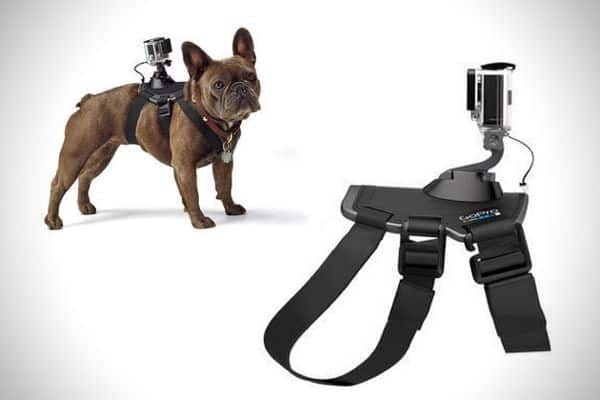
The GoPro Fetch is a legacy pet-mounted camera harness, not a motorized gimbal. It was designed to capture a camera viewpoint that moves with a dog, but the most important consideration today is the animal’s wellbeing rather than the novelty of the footage. This replacement review explains the difference between a camera harness and true stabilization, the uncertainty around older-camera compatibility, and why a supervised, comfortable experience matters more than capturing a particular video.
What is a GoPro Fetch harness?
A Fetch-style harness supports an action camera on an animal using a wearable accessory. It is not a powered three-axis stabilizer: the camera moves with the animal rather than receiving automatic pan/tilt/roll corrections from a motor. Any electronic stabilization in the camera may smooth part of the recorded movement, but the viewpoint will remain unpredictable. A conventional handheld or stationary camera usually gives more framing control.
Who might find it useful?
The idea can interest owners who already have a compatible action camera and whose dog is comfortable with ordinary gear. However, it is not a necessary pet accessory, and it should not be treated as universally suitable. Some animals dislike wearing unfamiliar equipment, while others may behave differently when accessories are introduced. Recording a pet’s activity is optional, and the animal’s normal comfort takes priority.

Animal comfort and supervision
The animal should be able to behave normally without the accessory interfering. The owner should supervise any optional camera accessory and stop using it if there is discomfort or a change in normal behavior. A harness with an attached camera should not be left on an unattended pet. If a dog finds the arrangement unpleasant, choose ordinary owner-operated footage instead. An entertaining viewpoint is never a good reason to prioritize recording over welfare.
Camera compatibility: do not assume all generations fit
The original Fetch was designed during an earlier period of GoPro cameras. Camera shapes, cases, mounting frames and connectors have changed over time. A marketplace listing may use “GoPro compatible” loosely; verify the precise original accessory, the camera body and any manufacturer-approved adapter or housing before purchase. An older low-cost product is not necessarily a good value if it does not work with the camera you own.
What footage can you realistically expect?
An animal-worn camera captures a moving perspective that can change suddenly when the animal turns or lowers its head. That unpredictability may be the creative appeal, but it makes deliberate framing difficult. The lens can point away from the subject, and the recording may contain movement or environmental sound that a motorized gimbal could not completely correct. Video quality is still shaped by the camera sensor, light, recording mode and audio.

GoPro Fetch versus a handheld camera
The main difference is creative control. With a handheld camera, the operator can decide what to frame and choose a stable shot. With a harness, the direction of the camera follows the animal’s movement, so the results are less predictable. An external gimbal adds controlled motors and complexity; a pet harness does not. For reliable portraits, training moments or pet activities, ordinary owner-operated or stationary recording can be more straightforward and respectful of the pet.
What to check when shopping second-hand
- Confirm the seller is offering a genuine GoPro Fetch or accurately labelled alternative.
- Check compatibility with the specific camera generation, mount and housing.
- Assess the condition and completeness of the accessory rather than relying on original pricing.
- Avoid assuming a product remains covered by its launch-period warranty.
- Prioritize the animal’s comfort and ordinary safe activity over the recording.
- Consider whether a regular camera from a suitable supervised location could achieve the same visual goal.
Benefits and limitations
Potential benefit: a different viewpoint from the animal’s ordinary movement, where appropriate and comfortable. Limitations: unpredictable framing, the extra accessory carried by the animal, uncertain legacy compatibility and no mechanical stabilization. Modern cameras may also reduce the need for additional accessories in ordinary pet videos.
Questions readers often ask
Is GoPro Fetch a wearable gimbal?
No. It is a wearable camera harness rather than a powered motorized stabilizer.
Will any current GoPro work?
Compatibility should not be assumed. Check the exact accessory and camera documentation and whether any approved adapter is required.
What if my dog dislikes the accessory?
Do not continue using it. Filming is optional, and a handheld or stationary camera is a suitable alternative.
Is the original price still relevant?
No. Historic prices and retailer listings do not establish present value or stock.
Original affiliate reference and editorial disclosure
The earlier review referenced an Amazon product listing. Its tracking is retained solely as an archived reference; seller information, compatibility and stock are not independently verified. GoGimbals may earn a commission from qualifying purchases.
Archived GoPro Fetch retailer listing (verify product model and condition).
Related guidance
For a comparison with operator-controlled equipment, see the benefits of handheld gimbals, how three-axis stabilization works and our beginner filming guide. This revised article does not claim hands-on testing of a newly purchased Fetch or attribute the illustrative dog photographs to a product test.
Related reading: For passive chest-mounted camera perspectives, consult this related GoGimbals article. For older wearable gimbal technology, consult this related GoGimbals article. For helmet camera safety and equipment approval, consult this related GoGimbals article.